A 5 days trip to morocco from Marrakech to Fes offers travelers the perfect balance between comprehensive exploration and manageable pacing. Unlike shorter tours that rush through Morocco’s highlights, this extended itinerary allows for deeper immersion into the country’s diverse landscapes, ancient cultures, and architectural treasures. From the bustling souks of Marrakech to the medieval medina of Fes, with the majestic Sahara Desert nestled in between, this adventure captures the essence of Morocco in a way that leaves travelers enriched rather than exhausted.
Day One: Marrakech Exploration and Atlas Mountain Crossing
Your Moroccan odyssey begins with a thorough exploration of Marrakech, the “Red City” that has captivated visitors for centuries. The morning starts in Jemaa el-Fnaa, the main square that serves as the beating heart of Marrakech. This UNESCO-recognized cultural space transforms throughout the day, beginning as a relatively quiet marketplace before erupting into a sensory spectacle of storytellers, musicians, snake charmers, and food vendors as evening approaches.
The Koutoubia Mosque, with its 77-meter minaret dominating the skyline, represents masterpiece Almohad architecture. While non-Muslims cannot enter, the exterior craftsmanship and surrounding gardens merit appreciation. Nearby, the Bahia Palace showcases stunning examples of Moroccan decorative arts, with intricate tilework, carved cedar ceilings, and tranquil courtyards that once housed a grand vizier’s extensive household.
The Saadian Tombs, hidden for centuries until their rediscovery in 1917, contain beautifully decorated mausoleums housing members of the Saadian dynasty. The craftsmanship here rivals anything found in European royal tombs, with Italian Carrara marble, gilded honeycomb muqarnas, and delicate stucco work creating an atmosphere of serene beauty.
After lunch, the journey toward the Atlas Mountains begins. The afternoon drive takes you through changing landscapes as palm groves give way to rocky foothills, then to proper mountains. Your first night is spent in a traditional guesthouse in the Dades Valley or nearby area, where home-cooked Moroccan cuisine and warm Berber hospitality provide a perfect introduction to life beyond the cities.
Day Two: Kasbahs, Gorges, and Desert Gateway
The second day showcases Morocco’s geological wonders and architectural heritage. Ait Benhaddou, a fortified village that appears to grow organically from the hillside, represents centuries of Berber construction techniques. Its earthen buildings, constructed from adobe bricks and supported by wooden beams, have withstood both time and the elements. Walking through its narrow passages, climbing to the granary at the summit, and viewing the kasbah from across the river offers multiple perspectives on this remarkable site.
The route continues through the Valley of Roses, where Rosa damascena blooms create spectacular displays each spring. Even outside the blooming season, the valley’s beauty impresses with its contrast of pink-earthed hills, green agricultural terraces, and scattered kasbahs. Local cooperatives produce rose water and rose oil using traditional distillation methods, offering insights into this fragrant industry that provides income for many families.
Todra Gorge presents one of Morocco’s most dramatic natural formations. The canyon narrows to barely ten meters wide in places while limestone walls soar 300 meters overhead. Morning light filtering into the gorge creates magical effects as sunbeams illuminate particular rock faces while leaving others in shadow. The cool air within provides refreshing respite from desert heat, and the small river flowing through supports pockets of lush vegetation.
As you approach Merzouga, the landscape becomes increasingly desert-like. Sparse vegetation gives way to rocky plains, then to the first glimpses of genuine sand dunes. The town of Merzouga sits at the edge of Erg Chebbi, Morocco’s most spectacular and accessible major dune field. Your accommodation for the night might be in town or at a desert-edge auberge, preparing you for the following day’s deeper desert immersion.
Day Three: Sahara Desert Immersion
Day three is dedicated entirely to the Sahara experience, allowing for a more relaxed pace than compressed three-day tours. The morning might include exploring the Merzouga area, visiting nomadic families who maintain traditional lifestyles, or discovering the seasonal lake of Dayet Srji, which attracts flamingos and other migratory birds when water levels permit.
Some itineraries include a visit to Khamlia village, home to Gnawa people whose ancestors came from sub-Saharan Africa. The distinctive Gnawa music, featuring the three-stringed gimbri and metal castanets called qraqeb, creates hypnotic rhythms used in both celebration and spiritual ceremonies. Sharing tea while listening to live performances provides cultural context often missed in shorter tours.
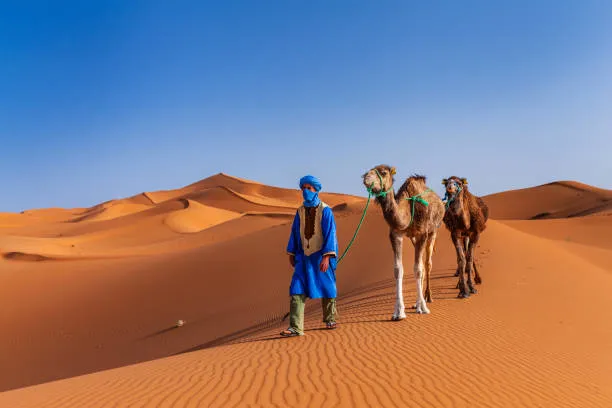
The afternoon camel trek begins earlier than in three-day tours, allowing more time to explore the dunes. Your caravan might venture deeper into Erg Chebbi, reaching areas of pristine sand far from other tourists. The extended trek time permits pauses for photography, sandboarding down dune faces, or simply sitting in silence absorbing the vastness.
Your desert camp for the night offers an authentic Berber experience, though comfort levels vary by tour operator. After a traditional dinner, local guides share stories around the campfire, demonstrating how desert navigation works using star positions and natural landmarks. The absence of light pollution creates stargazing opportunities that urban dwellers find revelatory, with the Milky Way stretching across the sky in brilliant clarity.
Day Four: Desert Dawn and the Road Through Middle Atlas
Waking before sunrise allows you to witness the Sahara’s transformation from darkness to light. Climbing a nearby dune to watch the sun emerge over the sand sea ranks among travel’s most memorable moments. The temperature shifts dramatically as the sun rises, the colors evolve from deep purples through oranges to brilliant golds, and the entire landscape seems to awaken.
After breakfast and the return camel trek, the journey toward Fes begins with ample time for stops and exploration. The route through Erfoud allows visits to fossil workshops where artisans craft decorative items from the ancient marine fossils abundant in local limestone. These remnants of ancient seas that once covered the Sahara provide tangible evidence of Earth’s dramatic geological changes.
Lunch in Midelt, nestled in the gap between High and Middle Atlas mountains, offers regional specialties and fresh produce from surrounding orchards. The afternoon drive through the Middle Atlas reveals landscapes remarkably different from anything encountered so far. Cedar forests appear, their twisted trunks and evergreen canopies creating ecosystems that support Barbary macaques, the only macaque species found outside Asia.
Azrou, a Berber town famous for handicrafts, provides opportunities to observe carpet weavers and wood carvers practicing skills passed through generations. The nearby cedar forests contain trees hundreds of years old, some achieving massive proportions. Macaque troops in these forests have become habituated to visitors, though feeding them is discouraged to maintain natural behaviors.
Ifrane, with its European-style architecture, clean streets, and Alpine atmosphere, feels surreal after days in desert and traditional villages. Built during the French protectorate as a summer retreat, this planned city maintains strict architectural codes and meticulous landscaping that earned it the nickname “Little Switzerland.”
Evening arrival in Fes allows time to settle into your accommodation and perhaps take an initial stroll through the medina’s outer edges, building anticipation for the following day’s thorough exploration.
Day Five: Fes – Morocco’s Spiritual and Cultural Heart
The final day is devoted to Fes, Morocco’s oldest imperial city and arguably its most fascinating. Founded in the 9th century, Fes el-Bali (Old Fes) represents the world’s largest living medieval city, a UNESCO World Heritage site where daily life continues much as it has for centuries.
A knowledgeable local guide proves invaluable in navigating the medina’s estimated 9,400 lanes and alleys. The Bou Inania Madrasa showcases Marinid architecture at its finest, with stunning zellige tilework, carved cedar, and ornate stucco covering every surface. The adjoining water clock, though no longer functional, demonstrates medieval Islamic engineering ingenuity.
The Chouara Tannery, Fes’s most photographed site, operates using methods unchanged since medieval times. From surrounding terrace viewpoints, visitors observe workers standing in stone vessels filled with natural dyes, treating leather using techniques that produce distinctive aromas detectable from considerable distances. The visual spectacle of colorful dye pits arranged like an artist’s palette makes this a photographer’s dream.
Al-Qarawiyyin University, founded in 859 CE, holds the Guinness World Record as the world’s oldest continuously operating degree-granting institution. While only Muslims can enter the mosque, viewing the interior courtyard from designated entrances reveals architectural beauty that inspired builders across the Islamic world.
The souks of Fes organize by trade, creating distinct districts for metalworkers, leather sellers, spice merchants, and textile dealers. Unlike tourist-oriented markets elsewhere, Fes’s souks primarily serve local residents, maintaining authenticity that travelers increasingly value. Observing craftsmen at work—copper being hammered into decorative plates, leather being tooled into bags, silk being woven into fabrics—provides insights into skills requiring years of apprenticeship.
The mellah (Jewish quarter) tells stories of Fes’s once-substantial Jewish community, with distinctive architecture featuring enclosed balconies and the restored Ibn Danan Synagogue. Though most Moroccan Jews emigrated in the 20th century, their contributions to Fes’s culture and commerce remain evident.
Maximizing Your Five-Day Journey
The five-day timeframe offers significant advantages over shorter tours. The extra days eliminate the rushed feeling that can diminish enjoyment, allow for spontaneous stops at interesting sites encountered along the route, provide recovery time from long driving days, and permit deeper engagement with local cultures through extended interactions.
Choosing between group and private tours depends on budget, preferences, and travel style. Group tours typically cost less and offer opportunities to meet fellow travelers, while private tours allow complete flexibility in pacing, stops, and accommodations. Many travelers find small group tours of four to eight people offer the best balance.
Accommodation choices significantly impact both cost and experience. Budget options might include basic guesthouses and standard desert camps, mid-range tours feature comfortable hotels and well-equipped camps, while luxury tours provide boutique riads, premium desert camps with private bathrooms, and superior vehicles. Understanding exactly what’s included in quoted prices prevents misunderstandings and ensures expectations align with reality.
Conclusion
The 5 days trip to morocco from Marrakech to Fes represents one of travel’s most rewarding adventures, compressing Morocco’s incredible diversity into a manageable timeframe. You’ll traverse multiple mountain ranges, cross vast deserts, explore ancient kasbahs, experience Berber hospitality, sleep under stars in the Sahara, and lose yourself in medieval medinas. Each day brings new landscapes, cultural encounters, and unforgettable moments that collectively create a comprehensive Moroccan experience.
This journey appeals to photographers seeking dramatic landscapes and cultural scenes, history enthusiasts fascinated by ancient civilizations and architectural heritage, adventure travelers wanting desert experiences and mountain crossings, and cultural explorers interested in authentic interactions with traditional communities. The five-day format provides enough time to appreciate each experience without the exhaustion that sometimes accompanies more compressed itineraries.
Morocco’s beauty lies not just in its monuments and landscapes but in the warmth of its people, the richness of its traditions, and the seamless blend of ancient and modern that defines contemporary Moroccan life. This five-day journey from Marrakech to Fes offers a perfect introduction to a country that rewards curiosity, embraces diversity, and leaves visitors planning their return before they’ve even departed.
FAQ
Q: What’s the difference between 3-day and 5-day tours from Marrakech to Fes?
A: The 5-day tour offers a more relaxed pace with less rushing, additional time exploring Marrakech at the start, an extra full day in the Sahara Desert allowing for deeper immersion, more opportunities for spontaneous stops and cultural interactions, and a complete day to explore Fes rather than just arriving in the evening. While 3-day tours cover the main highlights, 5-day tours provide a more comprehensive and less exhausting experience.
Q: Is the 5-day tour suitable for families with children?
A: Yes, the 5-day format works well for families as the more relaxed pacing suits children better than rushed 3-day tours. Most children find camel riding and desert camping particularly exciting. However, consider that long driving days may be challenging for very young children. Many tour operators can adjust itineraries for families, including shorter camel treks or 4×4 desert access instead.
Q: What’s typically included in the tour price?
A: Most tours include private transportation in comfortable vehicles, accommodation for all four nights (hotels/guesthouses and desert camp), breakfast daily, dinner in the desert and possibly other locations, camel trekking experience, and driver/guide services. Typically NOT included are lunches, drinks, entrance fees to monuments, and tips. Always confirm specific inclusions with your tour operator before booking.
Q: Can the itinerary be customized?
A: Private tours offer complete flexibility to adjust routes, add extra nights in particular locations, upgrade accommodations, or include specific sites of interest. Group tours follow fixed itineraries with limited flexibility. If you have specific interests—photography, hiking, cultural experiences, bird watching—communicate these when booking so the tour can be tailored appropriately.
Q: What should I pack for a 5-day Morocco tour?
A: Essential items include layers for varying temperatures (cold desert nights, warm days), comfortable walking shoes and sandals, sun protection (hat, sunglasses, SPF 50+ sunscreen), modest clothing respecting local culture, camera and chargers, personal toiletries and medications, flashlight or headlamp for camps, and a small daypack. Luggage should be soft-sided as space in vehicles is limited. Winter tours require warm clothing as temperatures can drop near freezing at night.
Q: When is the best time to take this 5-day tour?
A: Spring (March-May) and autumn (September-November) offer ideal conditions with comfortable temperatures, clear skies, and beautiful landscapes. Spring brings wildflower blooms especially in the Valley of Roses. Summer (June-August) sees extreme desert heat making daytime activities uncomfortable, though nights remain pleasant and crowds are smaller. Winter (December-February) can be cold with possible snow in mountain passes and freezing desert nights, but offers crystal-clear skies and fewer tourists.
Q: Are there any health or safety concerns?
A: Morocco is generally safe for tourists. Drink bottled water to avoid stomach issues, bring basic medications including anti-diarrheal medicine, use sunscreen religiously in the desert, stay hydrated especially during camel treks, and follow your guide’s advice regarding local customs and safety. Travel insurance covering medical emergencies and evacuation is highly recommended. Those with mobility issues should note that some locations involve uneven terrain and stairs.
Q: How much should I budget for extras beyond the tour price?
A: Budget approximately €15-25 per day for lunches, €5-10 daily for bottled water and snacks, €30-50 total for monument entrance fees, €20-30 for souvenirs if shopping, and €40-60 for tips (drivers, guides, camp staff). Having a mix of euros and Moroccan dirhams proves useful, though euros are widely accepted. ATMs are available in larger towns but may be scarce in remote areas.
