Morocco captivates travelers with its intoxicating blend of ancient medinas, sweeping desert dunes, snow-capped mountains, vibrant souks, and warm hospitality that transforms visitors into lifelong devotees. Planning a Morocco tour involves navigating countless options from quick weekend getaways to month-long odysseys, from luxury riads to budget hostels, from guided group experiences to independent adventures. Understanding Morocco’s geographic diversity, cultural complexities, and logistical realities ensures your tour delivers authentic experiences that honor this North African kingdom’s rich heritage while matching your travel style, budget, and time constraints.
Understanding Morocco’s Geographic Diversity
Morocco’s extraordinary appeal stems partly from remarkable geographic variety compressed into relatively compact territory. The country encompasses Mediterranean and Atlantic coastlines, four mountain ranges including the Atlas and Rif systems, the Sahara Desert’s western edge, fertile agricultural plains, and ancient river valleys that have sustained civilizations for millennia. This diversity means Morocco tours can incorporate beach relaxation, mountain trekking, desert camping, and imperial city exploration within single itineraries.
The imperial cities Marrakech, Fes, Meknes, and Rabat anchor most Morocco tours, each offering distinct historical periods and architectural styles. Marrakech’s red-earthed medina pulses with contemporary energy while preserving medieval structures. Fes maintains Morocco’s most authentic traditional atmosphere, its car-free medina functioning much as it has for centuries. Meknes showcases Spanish-Moorish influences, while Rabat balances ancient heritage with modern capital city functionality.
Beyond cities, Morocco’s coastal areas present different facets. Essaouira’s whitewashed medina attracts artists and windsurfers with laid-back Atlantic vibes. Tangier bridges continents at the Strait of Gibraltar, its cosmopolitan history reflecting European proximity. The fishing villages dotting the coast from Agadir to Casablanca offer authentic maritime culture largely untouched by tourism.
The Sahara Desert represents Morocco’s most iconic landscape for many international visitors. The Erg Chebbi dunes near Merzouga tower 150 meters high, their deep orange sands creating classic desert imagery. Reaching these remote formations requires substantial travel time, but rewards with experiences camel treks, starlit camps, sunrise over dunes that define many travelers’ Morocco memories.
Mountain regions showcase yet another Morocco entirely. The High Atlas stretches across the country’s midsection, containing Toubkal, North Africa’s highest peak at 4,167 meters. Berber villages cling to steep slopes, accessible only by foot or donkey, where traditional lifestyles persist despite modernization transforming lowland areas. The Rif Mountains in the north harbor the blue city of Chefchaouen, where buildings painted in countless shades of blue create one of the world’s most photogenic urban landscapes.
Types of Morocco Tours: Finding Your Perfect Fit
Morocco tours span a vast spectrum from rigidly structured group packages to completely independent travel, each approach offering distinct advantages and challenges. Understanding these options helps match tour styles with personal preferences and travel philosophies.
Organized Group Tours
Fully organized group tours provide maximum convenience and security for travelers uncomfortable with independent navigation in unfamiliar cultures. Reputable operators handle all logistics transportation, accommodation, meals, guide services, entrance fees allowing participants to focus entirely on experiences rather than planning details. These tours typically follow predetermined itineraries visiting major highlights with fixed departure dates and standardized pricing.
Group dynamics create both advantages and limitations. Traveling with others provides built-in social interaction, shared experiences, and potential friendships extending beyond the trip. However, group compromises mean accommodating varied interests, physical abilities, and travel paces. The scheduled nature prevents extended stays at locations that particularly resonate while forcing visits to sites that might not interest everyone.
Quality varies enormously between operators. Budget group tours often cut corners on accommodation quality, rush through sites, and employ less experienced guides. Premium operators justify higher costs through superior hotels, smaller group sizes (10-12 maximum versus 20-30), expert guides, and flexibility adjusting itineraries when opportunities arise. Research thoroughly the cheapest option rarely delivers the best value.
Private Guided Tours
Private tours eliminate group compromises while maintaining the convenience of professional organization. These customized experiences accommodate specific interests, allow flexible pacing, and provide exclusive guide attention ensuring questions get answered and cultural nuances explained thoroughly. Families, couples, or small friend groups find private tours particularly valuable for traveling together without strangers.
Customization represents private tours’ primary advantage. Photographers receive extended time at locations during optimal lighting. Culinary enthusiasts incorporate cooking classes and food market visits. Adventure seekers add hiking, quad biking, or extreme sports. The itinerary flexes around your interests rather than forcing you into predetermined schedules.
Private tours command premium pricing typically 50-100% more than equivalent group experiences. However, costs per person decrease with larger private groups, making family tours of four or more sometimes comparable to luxury group tour pricing while delivering superior personalization.
Semi-Independent Tours
Semi-independent options occupy middle ground, providing core logistics like transportation and accommodation while leaving daily activities flexible. These might include booked roads and inter-city transport with optional guided activities purchased locally, or comprehensive packages with built-in free time for independent exploration.
This approach suits travelers wanting security of arranged basics but freedom to discover personally. You’re not locked into group schedules but don’t face the challenge of booking everything independently in potentially unfamiliar languages and systems.
Fully Independent Travel
Experienced travelers comfortable with uncertainty often prefer complete independence, booking only flights and perhaps first-night accommodation before arriving. Morocco’s tourism infrastructure supports independent travel reasonably well. English and French are widely spoken in tourist areas, transportation networks connect major destinations, and accommodation ranges from budget hostels to luxury riads are bookable online.
Independent travel maximizes flexibility and often costs less than organized tours, though differences narrow when accounting for the planning time, potential mistakes, and negotiating skills required. The approach works best for those who enjoy planning as part of the adventure and can handle occasional frustration when things don’t work smoothly.
Essential Morocco Tour Itinerary Elements
Regardless of tour type, certain experiences define comprehensive Morocco exploration. The classic “grand tour” incorporates these elements across 10-14 days, though shorter trips focus on subsets matching available time.
The Imperial Cities Circuit
Visiting Morocco’s four imperial cities provides historical and cultural foundation. Marrakech typically serves as the entry point, its Jemaa el-Fnaa square, Majorelle Garden, and labyrinthine souks offering immediate immersion in the Moroccan atmosphere. Two full days barely scratch Marrakech’s surface, though many tours allocate only this minimum.
Fes demands equal time, its medieval medina presenting navigational challenges requiring local guides but rewarding with authentic glimpses of traditional crafts, ancient universities, and functioning tanneries using centuries-old techniques. The medina’s 9,000+ alleyways create sensory overload of spice aromas, metalworkers’ hammering, leather tannery odors, calls to prayer echoing between buildings.
Meknes receives less attention but offers impressive imperial architecture, proximity to Volubilis Roman ruins, and fewer tourist crowds than Marrakech or Fes. Rabat combines historical sites with contemporary capital city energy, its Hassan Tower and Kasbah of the Udayas providing architectural highlights.
Desert Experiences
Sahara Desert tours represent Morocco’s most iconic experiences for many international visitors. Standard desert tours from Marrakech to Merzouga require a minimum of three days one day driving through Atlas Mountains and Dades Valley, one day in the desert with camel trekking and overnight camping, one day returning. This compressed timeline involves extensive driving but captures essential desert magic.
Longer tours incorporate additional desert time, alternative routes through different valleys, or connection to Fes rather than returning to Marrakech. The linear Marrakech-to-Fes routing maximizes geographic coverage while eliminating backtracking.
Desert experiences center on specific moments: camel caravans at sunset entering dune fields, traditional Berber camps with communal dining and music, star-filled skies unmarred by light pollution, and sunrise from high dunes revealing the desert’s texture and scale. These elements remain consistent across budget to luxury camps, though comfort levels and amenities vary dramatically.
Mountain and Valley Exploration
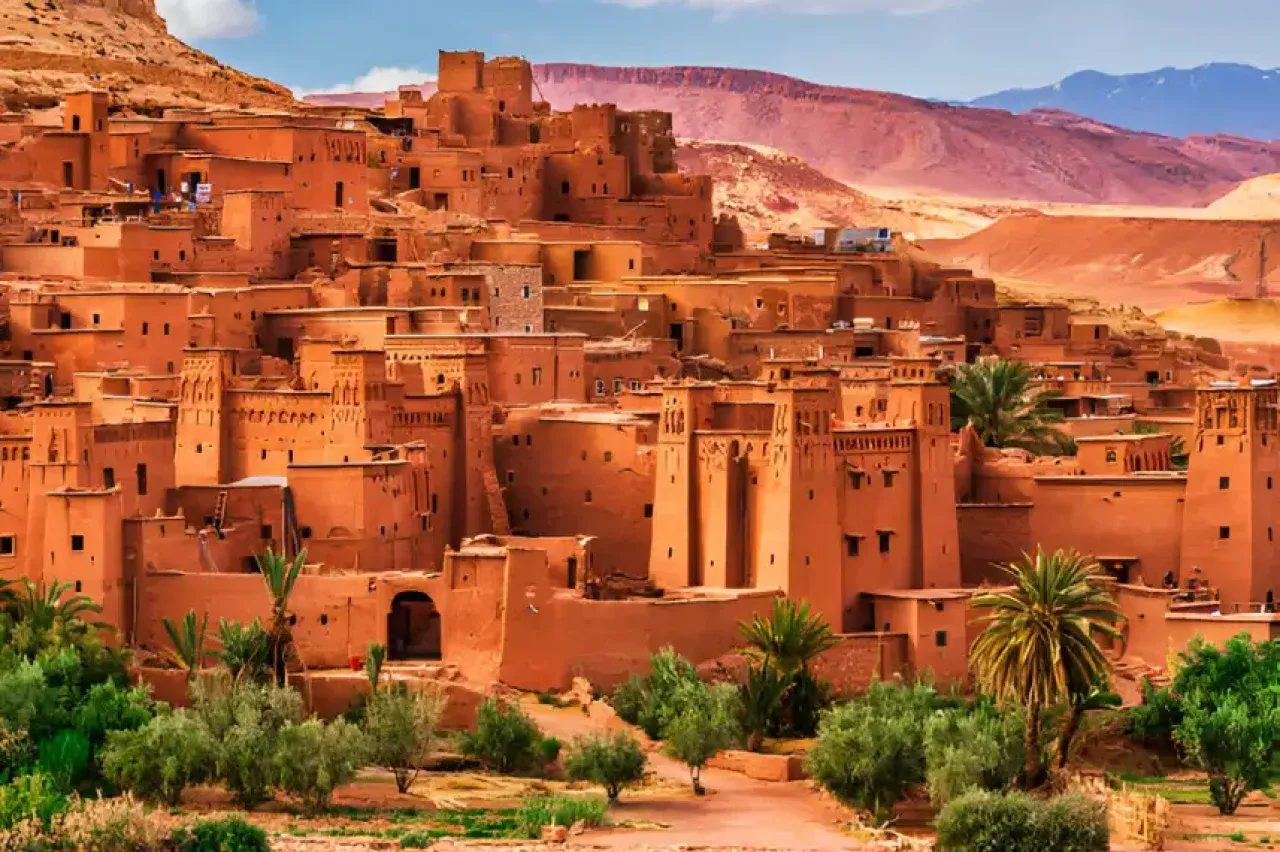
Atlas Mountains exposure typically occurs during desert journeys, with routes crossing the Tizi n’Tichka pass and stopping at iconic sites like Ait Benhaddou. However, dedicated mountain experiences, day trips from Marrakech to Berber villages, hiking in Toubkal National Park, or multi-day treks reveal aspects of Morocco that desert and city tourism cannot.
Mountain communities maintain traditional Berber cultures, architectural styles, and agricultural practices providing stark contrast to urban Morocco. The hospitality extended in mountain villages, often including mint tea ceremonies and home-cooked meals, creates personal connections transcending typical tourist-local interactions.
Coastal Diversity
Morocco’s coastlines offer respite from inland intensity. Essaouira provides the most popular coastal addition to Morocco tours, its relaxed atmosphere, artistic community, and fresh seafood creating a welcome contrast to Marrakech’s chaos. The Atlantic winds attract windsurfers and kitesurfers, while the fortified medina invites leisurely wandering through gallery-lined streets.
Northern coastal areas see fewer international tourists but are rewarded with authentic Moroccan beach culture. The drive from Fes to Chefchaouen passes through the Rif Mountains before descending to the Mediterranean, providing geographic variety within touring circuits.
Practical Tour Planning Considerations
Successful Morocco tours balance ambition with realistic assessments of time, distance, and energy. Morocco’s compact appearance on maps disguises the reality that mountain roads and desert tracks consume more hours than mileage suggests. Attempting too much creates exhausting schedules that diminish enjoyment.
Optimal Tour Durations
One-week tours typically focus on either the imperial cities circuit or a Marrakech-desert-Fes trajectory, with perhaps one coastal addition. Two weeks allows comprehensive coverage including multiple cities, desert experiences, mountain exploration, and coastal relaxation without constant rushing. Three weeks or more enables deeper immersion, extended stays in favorite locations, and ventures into less-visited regions like the Anti-Atlas or southern oases.
Seasonal Timing
Morocco welcomes visitors year-round, but seasons dramatically affect experiences. Spring (March-May) and autumn (September-November) provide ideal conditions across most regions: moderate temperatures, blooming landscapes in spring, harvest activities in autumn, and comfortable desert camping weather.
Summer brings extreme heat to desert and inland areas but pleasant coastal and mountain conditions. Winter offers excellent city touring weather and snow-dusted Atlas peaks, though high passes may close and desert nights become very cold. Ramadan affects restaurant hours and local rhythms but doesn’t prevent tourism, requiring only minor adjustments and cultural sensitivity.
Budget Considerations
Morocco tour costs vary enormously based on accommodation standards, transportation methods, guide quality, and inclusions. Budget tours might cost $50-80 daily per person, mid-range experiences $100-200 daily, and luxury tours $300-500+ daily. These figures typically include accommodation, transportation, guides, and some meals.
Additional expenses include entrance fees (usually modest), meals not included in packages, shopping opportunities in souks, tips for guides and drivers, and optional activities. Morocco remains relatively affordable compared to Western destinations, with quality experiences accessible across budget ranges.
Cultural Preparation and Etiquette
Morocco tours succeed when travelers approach cultural differences with respect and curiosity rather than judgment. Islamic customs influence daily rhythms, prayer times, Ramadan fasting, modest dress expectations, and gender dynamics different from Western norms. Understanding these elements prevents unintended offenses and enriches interactions.
Appropriate dress means covering shoulders and knees, particularly for women, though enforcement varies between tourist areas and conservative regions. Photography etiquette requires asking permission before photographing people, respecting restrictions at religious sites, and understanding that some subjects consider photography inappropriate regardless of permission requests.
Bargaining in souks represents expected social interaction rather than confrontation. Prices for tourists typically start high, with good-natured negotiation part of the shopping experience. However, fixed-price shops and modern retail operate differently, requiring awareness of which contexts expect bargaining.
Conclusion
A Morocco tour offers journeys through landscapes where desert dunes meet mountain peaks, where medieval medinas function alongside modern cities, and where ancient traditions persist while embracing selective modernization. The country rewards travelers who invest time in thoughtful planning, approach cultural differences with openness, and balance structured experiences with spontaneous discoveries.
Whether choosing organized group tours for convenience and security, private experiences for personalization and flexibility, or independent adventures for freedom and authenticity, Morocco accommodates diverse travel styles. The key lies in matching tour approaches with personal preferences, realistic time assessments, and willingness to embrace both Morocco’s extraordinary beauty and occasional challenges that come with traveling in developing nations.
The memories created during Morocco tours mint tea shared with Berber families, navigating Fes medina’s labyrinthine alleys, watching sunrise paint Sahara dunes in impossible colors, savoring tagines slowly cooked in earthenware pots endure long after returning home, often inspiring return visits to explore the regions and experiences that single tours inevitably cannot fully encompass.
Frequently Asked Questions
How many days do I need for a comprehensive Morocco tour?
A minimum of 7-10 days covers the essential highlights: Marrakech, desert experience, and Fes, with perhaps one additional element like Chefchaouen or Essaouira. Ideal comprehensive tours run 12-14 days, allowing comfortable pacing without constant rushing. Two or three weeks enable deeper exploration and extended stays in favorite locations.
Is Morocco safe for tourists, especially solo female travelers?
Morocco is generally safe for tourists with normal precautions. Violent crime against tourists is rare, though petty theft occurs in crowded areas. Solo female travelers should dress modestly, avoid walking alone late at night in unfamiliar areas, and may face more persistent attention from vendors and locals. Organized tours provide additional security layers for those concerned.
What’s the best time of year for a Morocco tour?
Spring (March-May) and autumn (September-November) offer optimal conditions across most regions with moderate temperatures and comfortable desert camping. Summer works well for coastal and mountain areas but brings extreme desert heat. Winter provides excellent city touring but cold desert nights and potential mountain pass closures.
Do I need a guide for Morocco tours or can I travel independently?
Independent travel is feasible in Morocco tourist infrastructure supports self-guided exploration. However, guides add tremendous value in medinas (easy to get lost), for cultural interpretation, language assistance, and accessing experiences difficult to arrange independently. Many travelers combine independent days with guided elements for optimal balance.
What should I budget for a Morocco tour?
Budget tours cost $50-80 per person daily, mid-range $100-200, luxury $300-500+. This typically includes accommodation, transport, guides, and some meals. Add 20-30% for entrance fees, remaining meals, shopping, tips, and activities. Morocco offers excellent value, with quality experiences accessible across budget ranges. Private tours cost more but decrease per person with larger groups.
