From the medieval splendor of its imperial cities to the infinite silence of its Saharan dunes, Morocco travel offers a depth of experience that few destinations on earth can rival — a kingdom where every road leads somewhere unforgettable.
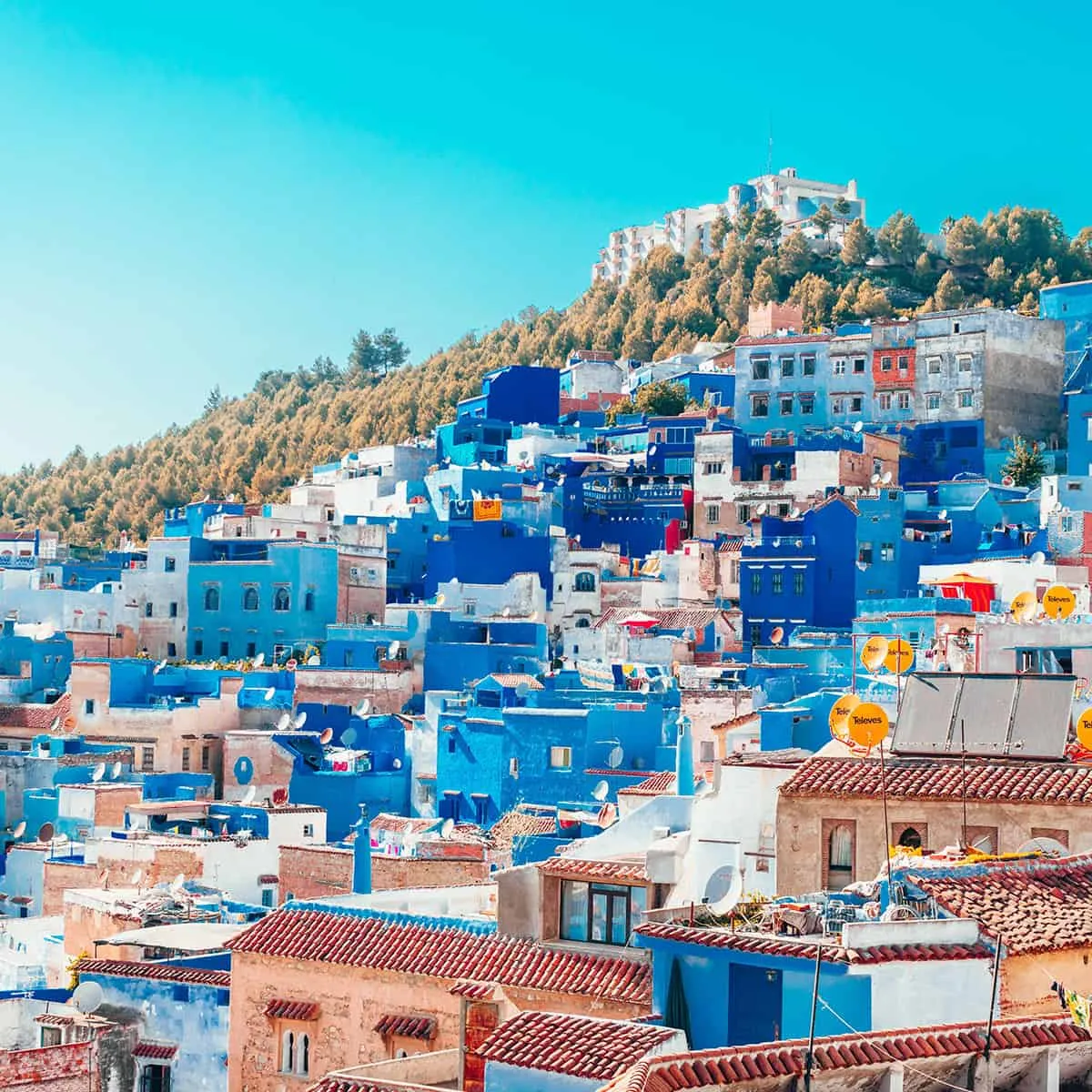
Ask anyone who has made the journey and they will tell you: Morocco travel changes you. Not in the vague, clichéd sense that all travel is said to broaden the mind, but in something more specific and more lasting — a recalibration of the senses, a widening of the palette, a quiet understanding that the world contains forms of beauty and civilization that no amount of reading can fully prepare you for. Morocco does not merely impress its visitors. It inhabits them.
This North African kingdom, bordered by the Atlantic Ocean to the west, the Mediterranean Sea to the north, Algeria to the east, and the vast Sahara to the south, occupies a geography as dramatically varied as its history. Morocco travel means moving through landscapes that shift from lush coastal plain to alpine snowfield to red-rock desert within a single day’s drive — and through a cultural world layered by Amazigh, Phoenician, Roman, Arab, Andalusian, Ottoman, and French influences, each leaving its mark on the architecture, the cuisine, the music, and the people.
The Four Pillars of Morocco Travel
Any honest guide to Morocco travel must begin with an acknowledgment of what makes the country so singularly compelling. It rests on four great pillars, each extraordinary in its own right, and together forming a travel experience without parallel in the region.
Imperial Heritage
Fez, Marrakech, Meknès, Rabat — four cities whose medinas, palaces, and mosques represent the pinnacle of Islamic and North African civilization.
Natural Majesty
The High Atlas, the Sahara, the Atlantic coast, and the Rif Mountains — four landscapes so different they seem to belong to four separate countries.
Living Culture
Amazigh traditions, Arabic poetry, Andalusian music, Jewish heritage, and Saharan nomadic life — a cultural mosaic still vibrantly alive.
Culinary Depth
One of the world’s great cuisines — tagine, couscous, pastilla, harira — built over centuries from the crossroads of continents and spice routes.
The Imperial Cities: Morocco Travel’s Beating Heart
For most Morocco travelers, the imperial cities form the backbone of any itinerary — and rightly so. Fez el-Bali, the oldest of the four, is perhaps the most complete surviving medieval city on earth. Its medina, unchanged in essential character since the 12th century, contains the world’s oldest continuously operating university, a tannery district where leather has been processed by hand for a thousand years, and a density of mosques, madrasas, and fondouks (merchant caravanserais) that makes every alley a chapter in architectural history.
Marrakech operates at an entirely different frequency — louder, more theatrical, more immediately seductive. The ochre-walled city pulses with energy from its souks, where artisans produce metalwork, leather, and textiles using methods passed down through generations, to the legendary Djemaa el-Fna square, where the evening air fills with the smoke of grilling meat, the sound of Gnawa drums, and the competing voices of storytellers whose tradition stretches back to the medieval oral courts. Morocco travel reaches one of its great peaks simply by standing still in this square as night falls.
“Morocco travel is not a passive experience. The country demands presence — asks you to look, listen, taste, and accept the unexpected with something approaching gratitude.”
Desert and Mountain: The Great Landscapes
Beyond the cities, Morocco travel reveals some of the most extraordinary natural landscapes on the planet. The journey south toward the Sahara — through the rose-pink Dadès Valley, past the towering walls of the Todra Gorge, and across the flat hammada (stony desert) that precedes the great ergs — is a geographic drama that unfolds over hours, building slowly toward the dunes of Erg Chebbi near Merzouga.
These dunes — some rising 150 meters above the desert floor, shifting imperceptibly in the wind, glowing copper and gold and rose depending on the hour — are among the most visually stunning formations in Africa. Morocco travelers who spend a night in a desert camp, watching the Milky Way wheel overhead in a sky undimmed by any artificial light, consistently describe the experience as among the most profound of their lives. The Sahara has a way of rendering priorities suddenly, mercifully clear.
The High Atlas Mountains offer an entirely different magnitude of beauty. Jebel Toubkal, at 4,167 meters the highest peak in North Africa, draws trekkers from across the world to its challenging but accessible summit trails. The valleys below — particularly the Ourika and Aït Benhaddou routes — shelter Berber villages of extraordinary character, where life is lived in close communion with the land and where the hospitality extended to Morocco travelers is as natural as breathing.
Morocco Travel and the Art of Slow Discovery
One of the most important lessons Morocco travel teaches is patience. The country resists the hurried itinerary. Its finest experiences are not timed or ticketed — they arise from lingering in a courtyard, accepting a second glass of tea, following a sound around a corner without knowing where it leads. The traveler who arrives with a rigid schedule and a long checklist will see Morocco. The traveler who builds in space for the unplanned will encounter it.
The riad — Morocco’s distinctive courtyard guesthouse, hidden behind unassuming medina doors — embodies this philosophy perfectly. Arriving at a riad after an afternoon in the souk, sinking into a cushioned salon while mint tea is prepared, listening to the fountain in the courtyard below: this is Morocco travel at its most essential, and it costs nothing beyond the willingness to slow down.
Language, Customs, and Cultural Essentials
Morocco’s linguistic landscape reflects its layered history. Arabic (in its Moroccan Darija dialect) and Amazigh (Tamazight) are the mother tongues of most Moroccans; French functions as the language of business, education, and much of urban life; Spanish is widely spoken in the north. For the Morocco traveler, a handful of Darija phrases transforms every interaction.
As-salamu alaykumPeace be upon you (greeting)ShukranThank youLabas?Are you well?BislamaGoodbyeB’ssahaTo your health (said after eating)
Cultural respect in Morocco is a matter of small gestures with large consequences. Dressing modestly near mosques and in medinas — covered shoulders and knees for all genders — signals awareness and earns warmth. Removing shoes before entering a home when invited. Accepting offered hospitality without the suspicious reflex that urban travel sometimes instills. These small acts open Morocco in ways that no guidebook passage or tour description can replicate.
Morocco Travel Essentials at a Glance
BEST TIME
Mar–May and Sept–Nov
MAIN AIRPORTS
Casablanca · Marrakech · Fez · Tangier
CURRENCY
Moroccan Dirham (MAD)
IDEAL DURATION
10–14 days minimum
SAFETY
Stable and visitor-friendly
BEST STAYS
Riads in medinas, desert camps
-
Book your riad months ahead — the finest fill quickly, especially in spring and autumn.
-
Carry small denomination dirhams; card payment remains unreliable in souks and rural areas.
-
Bargain in the souks with good humor — the exchange is social, not adversarial.
-
Allow at least two nights in the Sahara to truly absorb the scale and silence of the desert.
-
Eat where Moroccans eat — the best food in any medina is rarely in the tourist-facing restaurants.
-
Give yourself one completely unplanned day in each city. Morocco’s finest moments are rarely scheduled.
Morocco travel is, ultimately, a kind of education that no classroom can provide — in beauty, in history, in the extraordinary diversity of human civilization, and in the quietly radical act of being genuinely welcomed by a world that is not your own. The kingdom has been receiving travelers for two thousand years. It has, by now, perfected the art of making them never want to leave.
