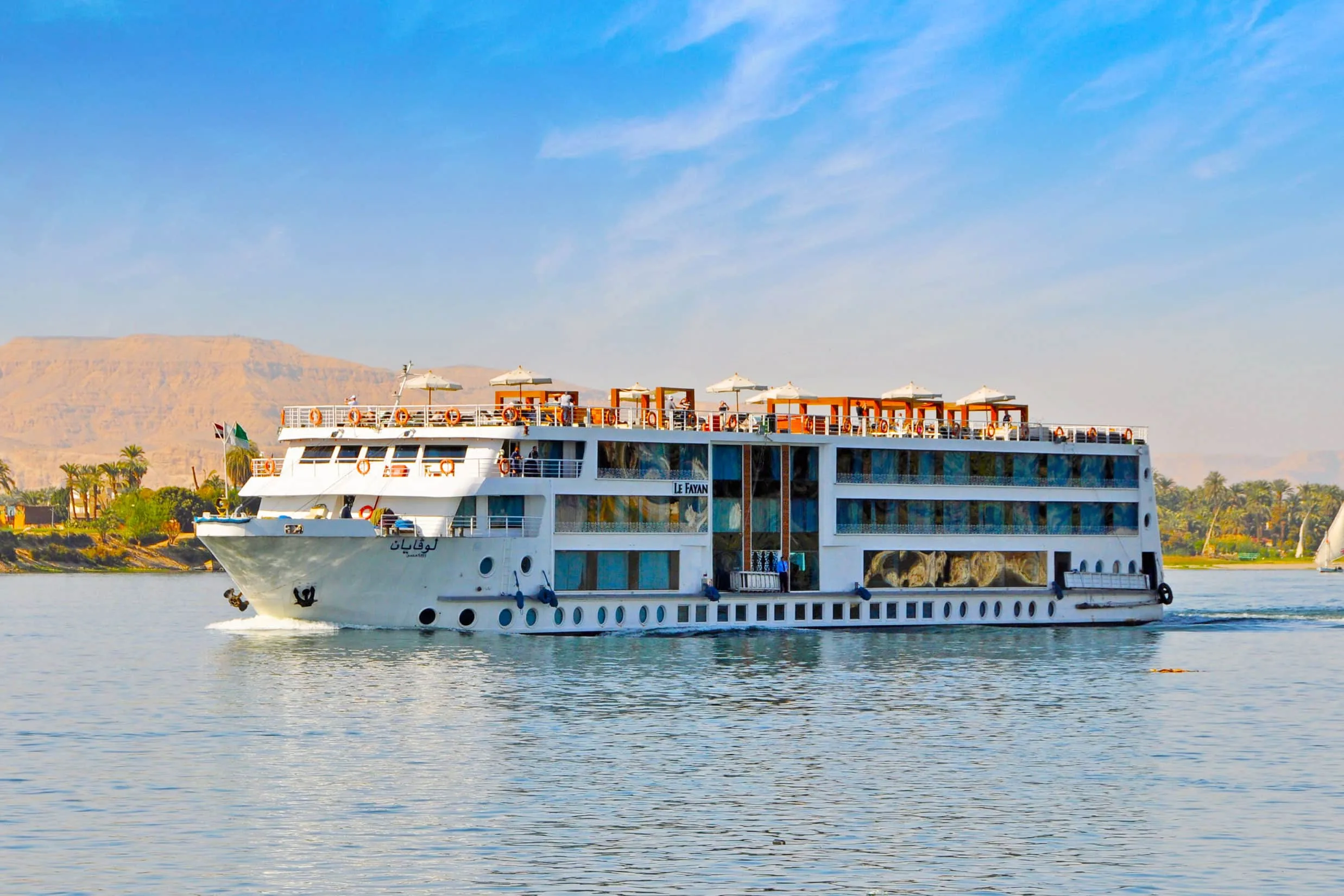
The Nile has shaped Egypt for thousands of years, connecting ancient cities, temples, villages, fertile farmland and desert landscapes along one of the world’s most remarkable rivers. Today, a Nile cruise in Egypt offers travelers an opportunity to experience this extraordinary region while traveling comfortably between some of the country’s most important archaeological sites.
Rather than changing hotels every night or spending long hours traveling between destinations by road, a Nile cruise creates a more relaxed rhythm. Travelers unpack once, settle into their cabin, and watch Egypt’s landscapes change from the ship’s deck or a private balcony. Between periods of sailing, they step ashore to explore monumental temples, ancient tombs and historic cities, often accompanied by an Egyptologist guide.
For travelers looking for a journey that combines history, comfort, scenery and meaningful cultural experiences, a Nile cruise from Luxor to Aswan can be one of the most rewarding ways to discover Upper Egypt.
Why Choose a Nile Cruise in Egypt?
A Nile cruise is much more than transportation between Luxor and Aswan. The river itself becomes part of the journey.
For thousands of years, the Nile has been at the heart of Egyptian civilization. Its waters supported agriculture and settlements, while ancient kingdoms developed cities, temples and religious centers along its banks. Traveling by river gives visitors an opportunity to understand this connection between the Nile and Egyptian life in a way that can be difficult to appreciate from a road-based itinerary.
A typical Nile cruise combines time on the water with visits to major archaeological attractions. Depending on the vessel and itinerary, travelers may visit Karnak Temple, Luxor Temple, the Valley of the Kings, Edfu Temple, Kom Ombo and Philae Temple.
The experience is particularly attractive to travelers who prefer a balanced pace. Mornings can be devoted to exploring ancient monuments, while afternoons may be spent relaxing on deck, enjoying a meal, reading a book or simply watching rural Egypt pass slowly by.
That combination of discovery and downtime is one of the greatest advantages of a Nile cruise.
The Classic Luxor to Aswan Nile Cruise Journey
For first-time visitors to Egypt, the Luxor to Aswan Nile cruise is one of the most popular ways to explore the country’s ancient heartland.
Luxor makes an excellent starting point because it provides access to some of the greatest monuments of ancient Thebes. From there, the journey continues south through Upper Egypt toward Aswan.
The exact route varies according to the ship, sailing schedule and number of nights, but the classic journey connects several of the most important archaeological sites along the Nile.
Travelers researching their options can explore a dedicated Luxor to Aswan Nile cruise itinerary to understand how the route can be incorporated into a wider Egypt vacation.
Luxor: The Gateway to Ancient Thebes
Luxor is often described as one of the world’s greatest open-air museums, and its archaeological heritage makes the description understandable.
On the East Bank, Karnak Temple demonstrates the enormous scale and complexity of ancient Egyptian religious architecture. Developed over many centuries, the temple complex contains monumental pylons, colossal columns, sanctuaries, courtyards and sacred spaces.
Nearby, Luxor Temple offers a different atmosphere. Located close to the modern city, the temple provides a fascinating contrast between ancient architecture and contemporary Egyptian life. Its monuments are particularly atmospheric during the later afternoon and evening.
Travelers should also allow sufficient time for the West Bank before or after boarding their Nile cruise.
Exploring the Valley of the Kings
Across the Nile from modern Luxor lies the ancient necropolis of Thebes.
The Valley of the Kings contains the tombs of numerous New Kingdom rulers, including the famous tomb of Tutankhamun. Unlike the monumental pyramids of the Old Kingdom, these royal tombs were constructed inside the desert mountains.
Inside, visitors can find beautifully preserved wall paintings, religious texts and symbolic scenes connected to ancient Egyptian beliefs about death and the afterlife.
A private Egyptologist can make this experience significantly more meaningful. Instead of simply walking through decorated chambers, travelers can learn about the religious symbolism, burial traditions, historical figures and artistic details represented in the tombs.
The nearby Temple of Hatshepsut at Deir el-Bahari is another major highlight. Its terraces rise dramatically beneath the surrounding cliffs, creating one of Luxor’s most distinctive archaeological landscapes.
Sailing Toward Edfu
Once the ship leaves Luxor, the character of the journey begins to change.
The archaeological sites remain important, but the Nile itself becomes the central attraction.
From the deck, travelers can watch palm trees, agricultural fields, small villages, traditional boats and desert landscapes pass along the riverbanks. The contrast between fertile land and surrounding desert is one of the defining visual experiences of Upper Egypt.
This is where a Nile cruise differs from a conventional sightseeing tour.
There is no need to spend every hour sitting in a vehicle. Instead, the journey between destinations becomes part of the experience.
Travelers can have breakfast while watching the river, relax on deck during the afternoon and arrive at the next archaeological site without packing and unpacking again.
Edfu Temple
One of the major stops between Luxor and Aswan is Edfu, home to the remarkably preserved Temple of Horus.
Dedicated to Horus, the falcon-headed god, the temple was constructed during the Ptolemaic period and remains one of the best-preserved major temples in Egypt.
Its enormous entrance pylons, courtyards, columns and detailed reliefs provide visitors with an impressive insight into ancient Egyptian religious architecture.
Edfu also demonstrates that the history of Egypt extends far beyond the great pyramids. The monuments along the Nile represent different periods of Egyptian history, including the Ptolemaic and Greco-Roman eras.
For travelers interested in history, architecture and mythology, Edfu is an essential part of the Nile journey.
Kom Ombo: A Temple Beside the Nile
Further south, the cruise reaches Kom Ombo, another fascinating archaeological site directly beside the river.
The temple is unusual because it was dedicated to two principal deities: Sobek, the crocodile god, and Horus the Elder.
Its riverside location gives the site a distinctive atmosphere. Depending on the sailing schedule, travelers may arrive around sunset, when the changing light creates a beautiful contrast between the ancient stone structures and the Nile.
The temple contains reliefs and inscriptions that provide insights into religious traditions, medical knowledge and aspects of ancient Egyptian life.
Kom Ombo is also a reminder that the Nile was not simply a source of water. It was a major route connecting communities, religious centers and trading regions throughout ancient Egypt.
Arriving in Aswan
As the cruise continues south, the scenery around Aswan becomes increasingly distinctive.
Known for its granite islands, river landscapes and connection with Nubia, Aswan has a more relaxed atmosphere than many of Egypt’s larger cities.
One of the essential experiences here is a visit to Philae Temple, dedicated primarily to the goddess Isis.
The temple complex was relocated to Agilkia Island as part of an international effort to protect it from rising waters following the construction of the Aswan High Dam.
Reaching Philae by boat makes the visit particularly memorable. The approach across the water provides a beautiful introduction to the temple and its island setting.
Travelers can also consider a traditional felucca ride around Aswan, particularly near sunset. These traditional sailing boats move quietly across the river and offer a peaceful contrast to the monumental archaeological sites visited during the cruise.
Nile Cruise or Dahabiya: Which Is Better?
Not every traveler wants the same type of Nile experience.
A conventional Nile cruise ship can be a good choice for travelers who value a wider range of onboard facilities, larger accommodation options, restaurants, swimming pools and the convenience of a full-service river vessel.
A Dahabiya Nile cruise, on the other hand, focuses more heavily on intimacy, privacy and slower travel.
Dahabiyas are traditional-style sailing boats with relatively small numbers of cabins. Their smaller size creates a more personal atmosphere and, depending on the itinerary and river conditions, can allow them to stop at quieter locations away from the larger cruise-ship route.
For couples, families and private groups, a Dahabiya can offer a particularly appealing experience.
The emphasis is less on the size of the ship and more on the quality of the journey: quiet sailing, intimate dining, river views and additional opportunities to experience the Nile at a slower pace.
Neither option is universally better.
The right choice depends on the traveler’s priorities, budget, preferred level of service and desired pace.
What Does a Luxury Nile Cruise Include?
Luxury Nile cruises can differ considerably from one vessel to another, so travelers should always check exactly what is included before booking.
Depending on the cruise, inclusions may include:
-
Accommodation in a Nile-view cabin or suite
-
Breakfast, lunch and dinner
-
Onboard facilities and services
-
Guided visits to selected archaeological sites
-
Egyptologist-guided excursions
-
Transfers between hotels, airports and the cruise
-
Entrance fees for included attractions
-
Private or shared sightseeing arrangements
Luxury travelers should pay particular attention to the cabin.
A Nile-facing balcony, panoramic window or private outdoor space can significantly improve the experience because the river is one of the central attractions of the journey.
Service quality, dining arrangements, cabin size, itinerary design and the quality of archaeological excursions are equally important.
The phrase “five-star Nile cruise” alone does not necessarily tell travelers everything they need to know.
A well-designed luxury journey should combine comfortable accommodation with thoughtful sightseeing and reliable service.
When Is the Best Time for a Nile Cruise?
The cooler months are generally the most comfortable period for a Nile cruise in Egypt, particularly from autumn through spring.
From approximately October through April, temperatures in Upper Egypt are generally more comfortable for visiting archaeological sites than during the hottest summer months.
December, January and February are popular with international travelers who prefer cooler sightseeing conditions. These months can also experience higher demand for quality hotels, cruise cabins and private guides.
Spring and autumn can provide an attractive balance between comfortable weather and seasonal demand.
Summer is considerably hotter around Luxor and Aswan. Travelers visiting during the warmer months should plan sightseeing during cooler parts of the day, stay well hydrated and choose accommodation and transportation with comfort in mind.
The best travel season ultimately depends on individual preferences, but weather should always be considered when planning a Nile itinerary.
How Many Nights Should You Spend on the Nile?
For many travelers, four or five nights provides a good introduction to the classic Luxor–Aswan journey.
However, the ideal duration depends on the wider Egypt itinerary.
A traveler spending several days in Cairo might choose four nights on the Nile before continuing to Aswan and Abu Simbel.
Couples celebrating a honeymoon, anniversary or other special occasion may prefer a longer luxury cruise or private Dahabiya journey.
Travelers who enjoy slow travel may also benefit from adding extra nights in Luxor or Aswan before or after the cruise.
The important question is not simply how many nights to spend on the ship.
It is how much time you want to spend exploring versus relaxing.
A thoughtfully planned Egypt itinerary should not feel like a checklist of monuments.
Adding Abu Simbel to Your Nile Journey
Travelers continuing to Aswan should consider adding Abu Simbel to their Egypt itinerary.
Located in southern Egypt near the border with Sudan, Abu Simbel is home to two spectacular rock-cut temples built during the reign of Ramesses II.
The monumental statues at the entrance of the Great Temple are among the most recognizable examples of ancient Egyptian architecture.
The temples were later relocated to higher ground as part of an international campaign to protect them from the rising waters associated with the Aswan High Dam.
Abu Simbel can be visited from Aswan, but it requires additional transportation and planning.
For that reason, it is better to include the visit when designing the overall itinerary rather than trying to add it at the last minute.
Why Private Guiding Can Transform a Nile Cruise
Ancient Egypt is full of stories, symbols and historical details that are not always obvious to visitors.
This is where a private Egyptologist can transform a sightseeing visit into a deeper cultural experience.
Instead of simply learning the name of a temple, travelers can understand why it was built, which rulers contributed to it, what the reliefs represent and how the monument fits into the broader history of ancient Egypt.
Private guiding also allows the experience to adapt to different travelers.
History enthusiasts may want detailed explanations of inscriptions and architecture.
Families may prefer shorter, engaging explanations that keep children interested.
Photography enthusiasts may want more time at particular locations.
Couples may prefer a slower pace and more opportunities to enjoy the atmosphere.
This flexibility is one of the strongest advantages of combining a Nile cruise with private travel planning.
For travelers who want a completely personalized Egypt experience, working with a specialist such as MSM Travel Egypt can also help coordinate private guides, transfers, hotels and Nile cruise arrangements as part of a wider itinerary.
A More Meaningful Way to Experience Egypt
The best Nile cruise journeys are not simply about visiting famous monuments.
They are about understanding how the river continues to shape Egyptian life.
From the agricultural fields around Luxor to the Nubian influence around Aswan, the Nile remains a living part of the country rather than simply a historical backdrop.
Travelers can watch fishermen working along the river, see villages from the deck and observe the striking contrast between fertile farmland and the desert beyond.
This is one reason slow travel in Egypt is becoming an increasingly appealing approach for travelers who want more than a checklist of famous attractions.
Instead of rushing between destinations, a Nile cruise allows travelers to remain connected to one landscape for several days.
The journey itself becomes part of the destination.
Tips for Planning a Nile Cruise Egypt Journey
Before choosing a cruise, travelers should consider several important factors.
1. Choose the Right Vessel
Compare cabin sizes, balcony arrangements, dining options, service levels, onboard facilities and the overall atmosphere rather than relying only on a star classification.
2. Decide Between a Large Cruise and a Dahabiya
A larger cruise ship may suit travelers who want more onboard facilities and entertainment.
A Dahabiya can be more appropriate for travelers looking for privacy, intimacy and a slower style of travel.
3. Consider Private Guiding
A private Egyptologist can make major archaeological sites significantly more meaningful while allowing the sightseeing pace to adapt to individual interests.
4. Check the Exact Itinerary
Not every Nile cruise visits the same sites in exactly the same way.
Before booking, confirm the sailing route, number of nights, included excursions and whether entrance fees and guides are included.
5. Leave Time for Luxor and Aswan
The cruise should not necessarily be the entire Upper Egypt experience.
Adding extra nights in Luxor and Aswan can make the journey more relaxed and provide time for experiences that may not fit into the cruise schedule.
6. Book Early for Popular Travel Periods
The most desirable cabins, suites and smaller luxury vessels can have limited availability during high-demand periods.
Travelers seeking a specific ship or accommodation category should plan ahead whenever possible.
Final Thoughts: Is a Nile Cruise Worth It?
For travelers visiting Egypt for the first time, a Nile cruise offers something few other itineraries can match: the ability to combine some of the world’s most extraordinary ancient monuments with the comfort and rhythm of a river journey.
From the temples of Luxor to the tombs of the Valley of the Kings, the Temple of Horus at Edfu, Kom Ombo and the island setting of Philae, the route connects an extraordinary concentration of Egyptian history.
But the most memorable moments may happen between the monuments.
They happen while watching the sun disappear behind the desert, drinking coffee on deck as the river moves quietly past, or seeing a small village appear along the riverbank.
For travelers who value comfort, culture and a more thoughtful pace, a luxury Nile cruise in Egypt is not simply a way to see the country.
It is a way to experience the Nile itself—and to understand why this river has remained at the heart of Egyptian civilization for thousands of years.
Whether you choose a full-service cruise ship or a more intimate Dahabiya, the most rewarding journey is one that gives you enough time to slow down, explore deeply and appreciate the landscapes between Egypt’s ancient monuments.
A well-planned Nile journey can therefore become much more than a sightseeing itinerary. It can be a comfortable, immersive and memorable way to discover the history, culture and living landscapes of Upper Egypt.