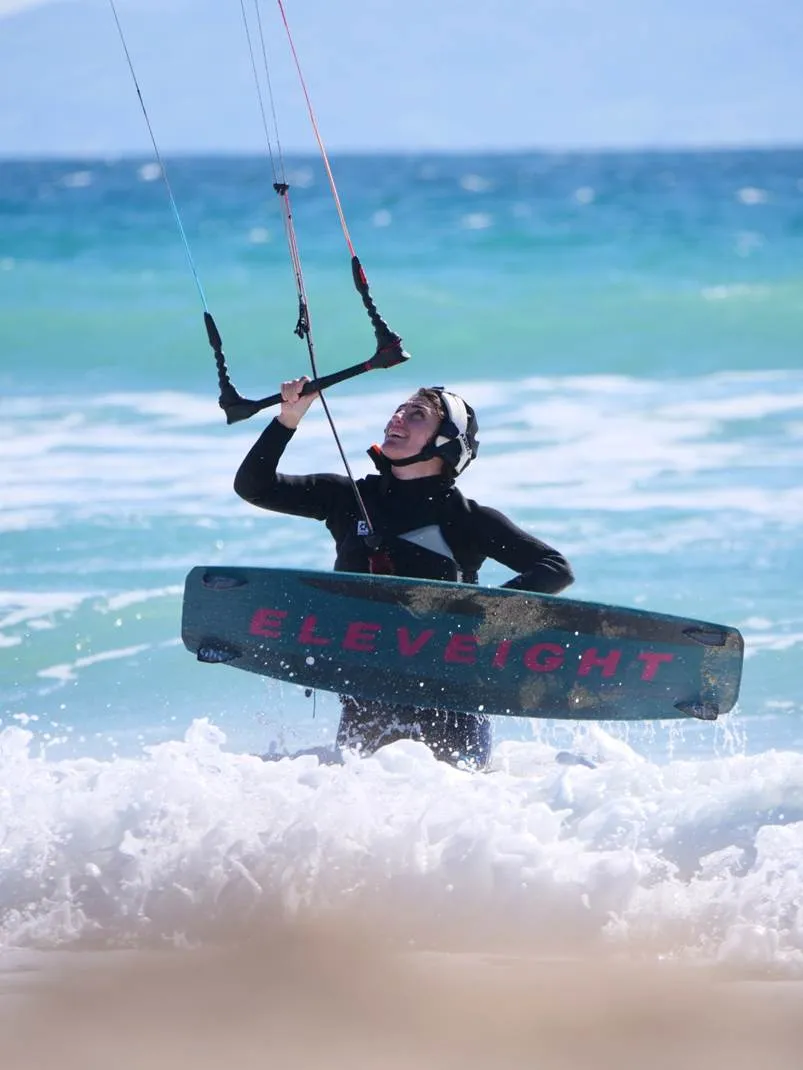
At the southern tip of Spain, where the Mediterranean meets the Atlantic, Tarifa has become one of Europe’s best-known destinations for wind sports. But there is much more to the town than kitesurfing. Its historic old town, long sandy beaches, nearby nature reserves and relaxed atmosphere make it an interesting destination for a few days or a longer holiday.
Whether you are visiting specifically to learn kitesurfing or simply want to discover Tarifa and its surroundings, choosing the right time to visit and the right area to stay can make a big difference.
When Is the Best Time to Visit Tarifa?
Tarifa is a year-round destination, but the experience changes considerably depending on the season.
For kitesurfers, spring through autumn offers the most activity. March to June and September to October are particularly attractive for visitors who want a combination of wind, pleasant temperatures and a little less summer congestion.
July and August are the busiest months. The town is more lively, beaches are busier and accommodation tends to be in higher demand. These months can still be excellent for a kitesurfing holiday, especially for visitors who enjoy a vibrant summer atmosphere.
The two main wind patterns in Tarifa are Levante, coming from the east, and Poniente, coming from the west. Their strength and timing vary, so kitesurfing lessons are normally planned according to the actual forecast and conditions rather than simply following a fixed daily schedule.
Where Should You Stay in Tarifa?
The best area to stay depends largely on what you want from your trip.
Tarifa’s historic old town is a convenient choice for visitors who want restaurants, cafés, shops and evening life within walking distance. The narrow streets and traditional Andalusian architecture give the centre much of its character.
Staying closer to the beaches can make sense if your main priority is kitesurfing and outdoor activities. However, the best location for a kitesurfing session can change with the wind, so being directly next to one particular beach is not always essential.
For many visitors, staying near the old town offers a good balance: you can enjoy the atmosphere of Tarifa in the evening while still reaching the beaches easily during the day.
How Do You Get to Tarifa?
Tarifa does not have its own airport, so most international visitors arrive through one of the nearby airports.
Gibraltar Airport is one of the closest options, while Málaga and Seville also offer a much wider choice of international connections. Renting a car is particularly useful if you want to explore the surrounding area or visit different beaches and attractions during your stay.
Once in Tarifa, the old town itself is very easy to explore on foot. Having a car becomes more useful when you want to visit places such as Bolonia, Zahara de los Atunes, Vejer de la Frontera or other beaches along the coast.
Is Tarifa Good for a Kitesurfing Holiday?
For anyone interested in learning or improving their kitesurfing, Tarifa offers a combination that is difficult to replicate elsewhere in Europe: regular wind, long sandy beaches, a large kitesurfing community and plenty of experienced schools and instructors.
Los Lances is one of the main areas used for kitesurfing and is particularly well known among schools. Conditions can vary with the wind and tide, so instructors choose the most suitable location and timing for the conditions of the day.
For beginners, the quality of instruction is just as important as the destination itself. A good school should adapt the lesson to the student’s level rather than simply following a fixed programme.
At Addict Kite School Tarifa, lessons are available as private, semi-private or small-group sessions. The equipment required for the lesson is provided by the school, while autonomous riders can also rent kitesurfing equipment separately.
What Is a Beginner Kitesurfing Lesson Like in Tarifa?
A first kitesurfing lesson normally begins with learning how to handle and control the kite safely. Students progressively learn the basic principles of the equipment, wind direction and kite control before moving into the water.
The exact progression depends on the student, the wind conditions and the amount of time available. Some people progress quickly, while others need more repetition before moving to the next stage.
For a complete beginner, five days is a good starting point. Having several consecutive days allows students to build their skills progressively and practise what they have learned. It does not mean that everyone will become completely independent in five days, but it provides enough time to make meaningful progress.
At Addict, lessons are 100% dependent on suitable wind conditions. The schedule is organised according to the forecast and the conditions expected for the following day, rather than guaranteeing a lesson at a fixed time regardless of the weather.
Can You Rent Kitesurfing Equipment in Tarifa?
Yes. Tarifa has several options for experienced riders who want to travel without bringing their own equipment.
Equipment rental is different from equipment provided during lessons. Beginners taking lessons do not need to purchase or bring their own kite, board and bar, as the equipment needed for the lesson is supplied by the school.
For autonomous riders who already have the necessary experience, Addict also offers kitesurfing equipment rental. Depending on the conditions, the rental service can include supervision and assistance, making it possible to enjoy a session without travelling with a full set of equipment.
What Can You Do in Tarifa Besides Kitesurfing?
One of Tarifa’s biggest advantages is that a kitesurfing trip does not have to revolve entirely around the beach.
The nearby village of Bolonia is home to one of the region’s most impressive beaches and the archaeological site of Baelo Claudia, an ancient Roman city overlooking the coast. The area is well worth visiting even if there is no wind.
The old town of Tarifa is also worth exploring, with its historic streets, small shops, cafés and restaurants. From the town, visitors can also take part in whale and dolphin watching excursions in the Strait of Gibraltar, an important marine corridor between Europe and Africa.
Nature lovers can explore parts of the surrounding coastline and countryside, while day trips to places such as Vejer de la Frontera provide another perspective on the region.
What Is the Food Like in Tarifa?
Tarifa’s location between the Atlantic and Mediterranean influences its food culture. Seafood and fish are naturally important, while traditional Andalusian dishes can be found throughout the old town.
Tuna is particularly associated with the surrounding Cádiz coastline, while tapas, grilled fish and local seafood are easy to find in restaurants around the centre.
The town also has a strong international influence thanks to its large community of visitors and residents from different countries, so it is possible to find everything from traditional Spanish food to international and vegetarian options.
What Should You Do on a No-Wind Day?
A no-wind day does not necessarily mean a wasted day in Tarifa.
It can be a good opportunity to explore the old town, visit Bolonia and Baelo Claudia, spend time at the beach without a kite, or take a trip towards Vejer de la Frontera.
For visitors staying several days specifically to learn kitesurfing, flexibility is important. Wind conditions are naturally variable, so planning a trip with several days available gives you more opportunities to find suitable conditions for lessons.
How Many Days Do You Need in Tarifa?
For a first visit, four to seven days gives enough time to experience Tarifa without rushing.
If kitesurfing is the main reason for the trip, five days is a particularly useful starting point for beginners. It provides several opportunities to practise and allows the learning process to develop from one session to the next.
For more experienced riders, a shorter trip can still work well, particularly if the main goal is to get on the water whenever conditions are suitable.
Why Tarifa Works So Well for an Active Holiday
Tarifa combines several things in one relatively compact destination: reliable wind patterns, long beaches, a historic town, outdoor activities and easy access to some of southern Spain’s most interesting landscapes.
For first-time kitesurfers, the combination of experienced schools and a strong kitesurfing culture makes it possible to build skills while enjoying everything else the area has to offer.
For experienced riders, the variety of conditions and the large kitesurfing community provide plenty of reasons to come back.
And for anyone travelling with friends or family, Tarifa offers enough activities away from the water to make the trip worthwhile whether the wind is blowing or not.
If learning to kitesurf is part of your plans, Addict Kite School Tarifa offers private, semi-private and small-group lessons for different levels, with equipment included during lessons and rental options available for independent riders.
Link: https://addictkiteschool.com/en/our-courses/beginners/ https://addictkiteschool.com/en/tarifa/