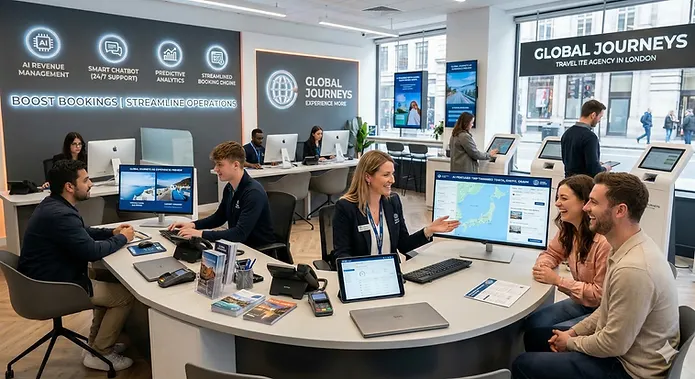
There are a number of interactions that are handled by the travel business before, during and after booking. Customer information can come in via websites, calls, email, social media, messaging, and so on, and when each is used individually, it’s hard for the customer to manage. A dedicated CRM can consolidate these interactions and streamline lead management, follow-up sequences, itineraries and customer interactions.
Travel Businesses Have Complex Workflows
This is because a travel inquiry does not go through a simple sales process. When deciding on a trip, a customer can query as many places, adjust dates, inquire about various accommodation choices, and even ask for personalized trip planning. Staff need to keep these facts in mind as they deal with other prospective customers.
An appropriate CRM can help to store customer data and make critical interactions readily available. Employees can collaborate on an inquiry without having to trawl through various conversations or spreadsheets. This can make the day-to-day easier and also offer better visibility throughout the sales process.
Centralize Customer Information
One of the main reasons companies explore CRM for travel industry needs is the difficulty of maintaining accurate customer information across multiple channels. Travel teams may collect contact details, destination preferences, previous bookings, budget considerations, and communication history during different conversations.
This will help employees determine the customer’s needs without having to ask the customer for the same information over and over again. It can also make it easier for a team to collaborate when another customer service team member must pick up on an inquiry or follow-up on an ongoing discussion.
Improve Lead Management
There are many inquiries that can be received by travel agencies that are still in the research phase. Your customers can book fast; others may need a number of follow-ups before booking. If they are not handled through a structured system, then leads may not be followed up on or responded to in a timely manner.
A CRM can assist teams in arranging inquiries by their stage of development. Leads can be followed from initial contact to discussion, itinerary preparation, follow-up and booking. This helps sales teams to know who they should be reaching out to and what they are doing.
Support Better Customer Communication
Communication comes in the middle of the travel buying process. Quick answers regarding destinations, accommodation, schedules, activities, transfers and changes of itinerary are often needed by customers. They may also prefer using different channels to communicate, depending on their situation.
A travel CRM system can assist teams in maintaining communication and keeping it linked with customer records. Having previous conversations readily available allows employees to give relevant responses. Automated messages, and reminders can also be used for routine communication, leaving staff more time to engage in more complex customer interactions.
Make Itinerary Management Easier
There are lots of travel sales processes that involve customized itineraries. They can be a time-intensive process to make by hand, as it requires information from a few sources and continually tweaking the details for each customer.
Having a CRM that has itinerary-related functionality can help you streamline this process. Customer preferences can be stored alongside trip data, and data can be saved from unnecessary duplication. AI tools can help to draft itineraries, too, so that employees can focus on enhancing the experience and engaging with customers about their options.
Connect Sales with Marketing
Customer relationships should not end after the first enquiry/completed booking. If businesses keep the lines of communication open with previous travelers, it can be well worth their while for repeat business.
Using a CRM can link customer data to marketing activities and help businesses segment customers and craft personalized campaigns. Former customers might be given details according to their past interests, itinerary or appropriate possibilities for the future. This can help make marketing communication more relevant than sending the same message to all contacts.
Choose a System Built for Travel
Businesses must consider more than the contact management features when choosing a travel agency CRM. Some key features to take into account are lead tracking, automation, communication management, itinerary support, reporting, integrations, and scalability.
The system needs to be a part of the business’s actual processes, and not an attempt to enforce changes where they are not necessary. Consistency is also crucial as it relates to ease of use – no matter how complicated the software is, it’s worth little if your teams can’t use it all of the time.
Conclusion
A specialized CRM can streamline and simplify complex customer journeys, streamline lead management, enhance communication and foster more integrated sales and marketing processes for travel businesses. The ultimate platform should facilitate day-to-day business and foster customer relationships over the long haul without being cumbersome. If the mentioned capabilities are interesting to explore, trawiz.ai is a travel-centric technology solution made to foster cutting-edge client interaction and business processes.